
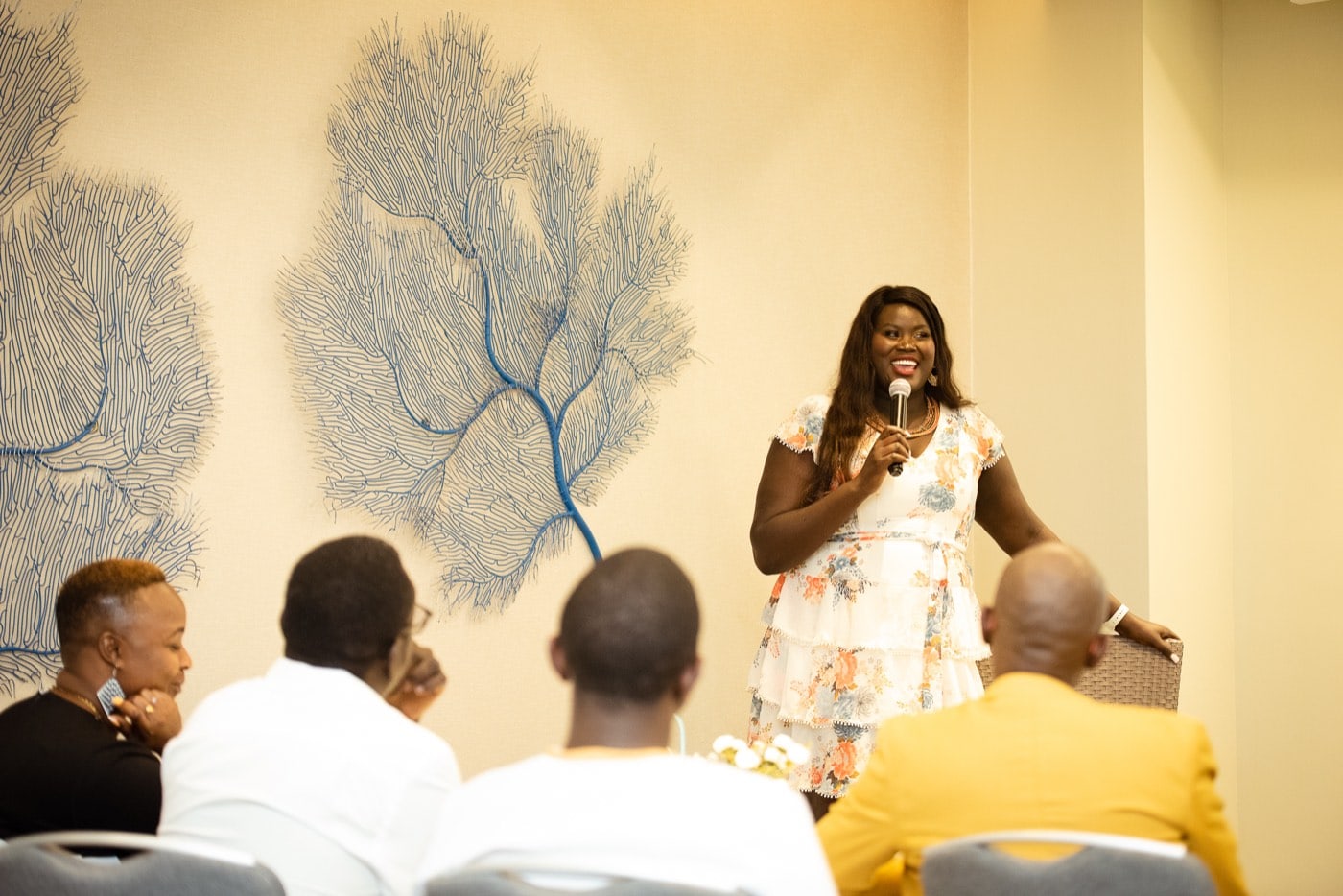
Creating thoughtful spaces for professionals ready to move beyond survival and live with clarity, peace and intention.

Awit Kuac
CURRENT ROLE
Founder, Nhom Lau Services
WEBSITE
Awit Kuac is a coach, mentor, speaker and author based in South Australia. She recently published The Free Spacious Mind, a manual and companion journal available on Amazon, and was named a contributing author in the 2019 academic book Youth, Place and Theories of Belonging, writing the chapter ‘Surveillance, belonging and community spaces for young people from refugee backgrounds in Australia’.

With a background in Human Services, Awit has worked across vulnerable communities including child protection, resettlement and employment support. Across these spaces, one pattern remained consistent: the individuals carrying the greatest responsibility were often the ones least supported in sustaining it. Many were not lacking capability — they were highly capable people navigating complex realities, who had learned to carry pressure, responsibility and expectation from an early stage of life.
What Awit observed was not weakness but weight. She recognised that those most in need of rest, clarity and peace were often the least likely to pursue it — not because they didn’t desire it, but because they had been conditioned to equate slowing down with failure.
Her work is grounded in a clear belief: high-functioning individuals are not struggling due to incapacity — they are carrying more than they were designed to hold, often without the structures, language or permission to live differently.
This insight led to the development of Nhom Lau — meaning “free mind” — a spacious and grounded way of living shaped by clarity, discernment and intentional boundaries.
In this engaging conversation, Awit shares her insights on how migrant professionals can move from survival to thriving, feel empowered and build lives that are sustainable, not just successful.
In Conversation with Awit Kuac
What are your hobbies and interests outside of work?
Singing and songwriting, going to the gym, and travelling.
How would you describe the kind of work you care most about and why it matters to you?
I care most about work that helps people understand themselves, move from survival to thriving, feel empowered and build lives that are sustainable, not just successful. Whether through social work, coaching, writing or speaking, the thread has always been the same: helping people move beyond simply coping to living with greater clarity and intention.
What part of who you are has shaped the way you work the most, even though it might never appear in your job description?
My lived experience as an ex-refugee and African Australian has shaped the way I work. It’s taught me to look beyond what is immediately visible, listen deeply and understand people in context. I bring that curiosity, compassion and discernment into everything I do.
A person can have a job, attend events and still feel like an outsider. What do you think turns access into a genuine sense of belonging?
Genuine belonging comes from being seen, respected and valued for what you bring, not simply being included to fill a seat.
What are some of the important unwritten rules of professional life that you have learnt and would like to share?
Your reputation often enters the room before you do — personal branding matters. Be reliable, treat people well regardless of their position, learn to communicate clearly and understand that relationships matter. Most importantly, don’t confuse being busy with being valuable — focus on doing work that actually matters.
For professionals who bring experience from another country, culture or system, what are the keys to building a successful career in a new environment?
Stay curious and adaptable. It’s not always the smartest or most intelligent who thrive, but those who can adapt.
Who opened an important professional door for you, and what did that person do that made a difference?
I’ve been blessed to have several people advocate for me, especially in rooms where I wasn’t present. Their willingness to recognise my potential, speak my name and open doors taught me the power of genuine professional sponsorship.

Now that you have experience and influence of your own, how do you try to open doors for other people?
I try to be intentional about sharing opportunities when they come up, writing referrals and recommendations, and connecting people to opportunities that could move their careers forward. Sometimes opening a door is simply making sure someone knows it exists.
What does leadership mean to you today and how has that changed over time?
I’ve learned that the most effective leadership is servant leadership. Leadership isn’t about status or being the loudest person in the room — it’s about serving well, creating opportunities for others to thrive, and remembering that your influence should benefit more than just you.
When you think about younger African professionals entering Australian workplaces now, what do you hope they will not have to struggle with in the same way that you did?
I hope they don’t feel they have to work twice as hard just to prove they belong. I hope they can enter Australian workplaces knowing their identity, culture and perspective are strengths, not things they need to minimise in order to succeed.
What do you hope your generation of professionals leaves in place for the people coming after you?
A good legacy — one where we didn’t just succeed individually, but created opportunities, opened doors and made the path a little easier for those coming after us.
What is one door African professionals should open for each other?
Innovative opportunities and business. We should create, invest in and open doors to new ideas and ventures that build opportunities for each other and for the generations coming after us.
What are you still learning in your own professional journey?
Being courageous and unapologetic about what I know and what I bring. I don’t want to shrink myself to fit in or battle tall poppy syndrome in the long run — just being confident in my abilities without losing humility.
In Her Own Words
Your reputation often enters the room before you do. Be reliable, treat people well regardless of their position, learn to communicate clearly and understand that relationships matter.
AK
Awit Kuac
Founder, Nhom Lau Services